 Pragmatic Gita
Spiritual meaning of Ekadasi
Ekadasi as a sacred pause to return to God
Ekadasi is the eleventh lunar day of each fortnight and occurs twice every lunar month. Within the Vaishnava tradition, it is especially dedicated to the remembrance and worship of Lord Vishnu and Sri Krishna.
Most people associate Ekadasi with fasting. However, its purpose is much deeper than simply avoiding certain foods. Ekadasi is a sacred pause from our usual habits. It gives us an opportunity to simplify our life, regulate the senses, and create more space for Bhagavan.
The real purpose of Ekadasi is not merely to keep the stomach empty. It is to make the heart more available to God.
The Meaning of Upavasa
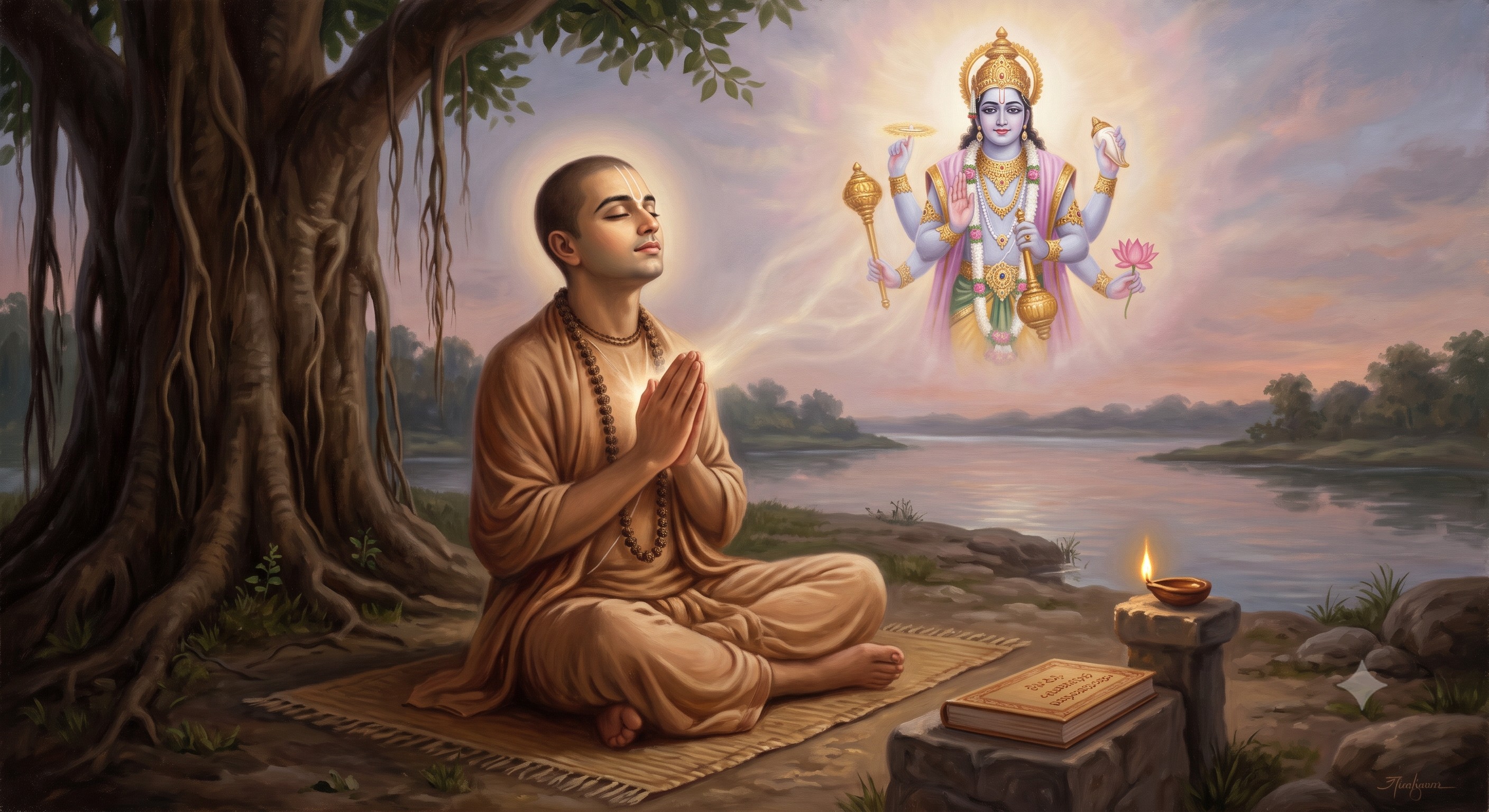
The Sanskrit word commonly used for fasting is upavasa. Upa means near, and vasa means to dwell. Upavasa therefore means to dwell near the Divine.
This gives us a simple way to evaluate our observance. At the end of Ekadasi, have we only stayed away from grains, or have we moved a little closer to Krishna?
A person may follow every dietary restriction while spending the day in irritation, gossip, entertainment, or constant thoughts about food. The external rule may have been followed, but its inner purpose remains incomplete.
At the same time, we should not dismiss the external discipline. The physical fast supports the inner intention. By voluntarily changing our routine, we remind the mind that it does not have to obey every desire immediately.
Food is not impure, and the body is not the enemy. Ekadasi simply teaches us that the senses are meant to serve us, not rule us.
Why Restraint Is Necessary
Much of our life is driven by automatic habits. We eat because it is time to eat. We reach for the phone because there is a moment of silence. We seek stimulation because stillness feels uncomfortable. We speak simply because a thought has arisen.
Ekadasi interrupts this mechanical movement.
When we step away from familiar comforts, we begin to notice how strongly the mind depends upon them. Hunger, cravings, impatience, and restlessness reveal the hidden demands of the senses.
This is not a reason to feel guilty. It is an opportunity to become aware.
Spiritual freedom begins when we can observe a desire without immediately becoming its servant. Ekadasi gives us a regular opportunity to practise this freedom.
However, restraint alone is not enough. The Bhagavad Gita teaches that the senses should be regulated while the mind is established in the Divine. If we reduce food but do not increase remembrance, the practice may become dry or frustrating.
Therefore, Ekadasi should include more nama-japa, prayer, kirtana, scriptural reflection, seva, and remembrance of Bhagavan.
Otherwise, we may fast from food while continuing to feed the ego.
Ekadasi and the Eleven Faculties – Spiritual meaning of Ekadasi
A traditional interpretation connects Ekadasi, the eleventh day, with the eleven faculties through which we experience and act in the world. These are the five organs of perception, the five organs of action, and the mind.
A complete observance therefore includes more than dietary restraint.
The eyes can fast from unnecessary distraction.
The ears can fast from gossip and agitation.
The tongue can fast from harsh speech as well as certain foods.
The hands can engage in service.
The mind can fast from resentment, comparison, anxiety, and endless consumption.
The goal is not to make the senses inactive. The goal is to redirect them.
The Srimad Bhagavatam describes how Maharaja Ambarisha used all his faculties in the service of Bhagavan. He fixed his mind on the lotus feet of Krishna, used his words to glorify the Lord, his ears to hear divine narrations, his hands in service, his eyes to see the Deity, and his tongue to honour prasada.
This is true sense control. The senses become peaceful not merely when they are denied engagement, but when they receive a purer engagement.
The Example of Maharaja Ambarisha
Maharaja Ambarisha is one of the great examples associated with Ekadasi.
He was not a renunciant who had abandoned the world. He was a king with enormous responsibilities. Yet he remained deeply devoted and observed Ekadasi with sincerity.
His example is especially relevant for householders, professionals, parents, and students. Spiritual discipline does not require us to abandon our responsibilities. It requires us to perform them with remembrance and devotion.
When Ambarisha was tested by Durvasa Muni, he remained calm, humble, and respectful even when treated unfairly.
This reveals the true fruit of Ekadasi. It is not shown by how hungry or weak we become. It is shown by how steady, compassionate, and God-centred we remain when life tests us.
If fasting makes us irritable, proud, or judgmental, then the outer discipline has not yet transformed the heart.
Ekadasi and the Bhagavad Gita
The Bhagavad Gita does not directly prescribe Ekadasi fasting, but its principles are fully aligned with the teachings of the Gita.
Sri Krishna teaches moderation in food, sleep, recreation, and activity. He also warns against harsh austerities performed through ego, pride, or self-torture. He describes sattvic living as “yuktāhāra-vihārasya“, moderation in eating and recreation.
Additional reference: BG 6.17: Chapter 6, Verse 17 – Bhagavad Gita, The Song of God – Swami Mukundananda
Therefore, Ekadasi should not become a competition in suffering.
The appropriate form of observance may differ according to a person’s age, health, responsibilities, and spiritual tradition. Some may observe a complete fast. Others may take water, fruit, milk, roots, or simple non-grain preparations.
The central question is not, “How little did I eat compared with others?”
The real question is, “Did this discipline help me remember Krishna more sincerely?”
Sri Krishna teaches us to remember Him while continuing to perform our duties. Ekadasi should therefore deepen remembrance without making us careless toward family, work, health, or other genuine responsibilities.
Fasting Is a Means, Not the Goal
A sacred practice can easily become transactional.
We may think, “I have fasted, so Bhagavan must remove my problems,” or, “My fast is stricter than someone else’s, so I must be more spiritual.”
But devotion is not a negotiation.
Ekadasi is not a method of placing God under obligation. It is an opportunity to reduce the noise within ourselves so that we can become more aware of His presence.
Krishna is not hungry for our discomfort. He accepts our devotion.
The value of fasting is not measured only by its severity. A simple observance performed with humility may have more spiritual depth than an extreme fast accompanied by pride.
How to Observe Ekadasi Meaningfully
A meaningful Ekadasi begins with a sincere sankalpa. We decide how we will observe the day according to our capacity and tradition.
The day may include additional nama-japa, reading from the Bhagavad Gita or Srimad Bhagavatam, listening to Hari-katha, singing kirtana, visiting a temple, performing seva, and offering simple worship.
Digital restraint can also be valuable. There is little benefit in fasting from food while continuously consuming news, videos, arguments, and social media. The stomach may be empty while the mind remains overloaded.
We can also fast from criticism, anger, gossip, complaining, and unnecessary conflict.
Those who are elderly, unwell, pregnant, taking medication, living with diabetes, recovering from an eating disorder, or managing other health concerns should not undertake severe fasting casually. A simpler devotional observance may be more appropriate.
Bhagavan is not displeased when a sincere devotee respects genuine bodily limitations.
What Should Change After Ekadasi?
The deeper test of Ekadasi begins after the fast ends.
Have we become slightly less controlled by habit?
Has our speech become kinder?
Has our remembrance of Krishna become more natural?
Have we become more grateful for food?
Have we understood the difference between a genuine need and a conditioned craving?
If Ekadasi becomes only a day of restriction followed by indulgence, its transformative power remains limited.
But when the awareness developed on Ekadasi enters the remaining days of our life, the vrata begins to fulfil its purpose.
Ekadasi is not an escape from life. It is a regular correction of direction.
Twice every lunar month, it invites us to pause and ask, “What has gradually taken control of my consciousness, and how can I return it to Bhagavan?”
Ekadasi as an Expression of Love
Ultimately, Ekadasi belongs to the path of bhakti.
A devotee does not observe it because deprivation is spiritually impressive. The devotee observes it because love naturally seeks opportunities to remember the Beloved more deeply.
For one sacred day, we rearrange our priorities and pray:
“Bhagavan, today I wish to reduce the claims of the world upon my mind. I wish to remember You more attentively. My senses are restless and my devotion is still developing, but I offer You this small effort. Please accept it and draw my consciousness closer to You.”
That prayer is the heart of Ekadasi.
The fast will end and the normal routine will return. But even one day sincerely centred upon Bhagavan can remind us of an essential truth.
Beneath all our desires, fears, duties, and distractions, the deepest hunger of the soul is the longing to return to Him.
krsnadaasa
(Servant of Krishna)